

How to Choose a Business Laptop Supplier for Bulk Orders
Post Author:
GetMi Team
Date Posted:
August 18, 2026
Share This:
Choose a business laptop supplier by confirming who controls the product, freezing the approved configuration, testing the exact sample, and comparing the full order terms rather than the unit price alone. A low quote has little value if the production batch arrives with different components, incomplete certificate files, weak defect terms, or accessories that do not fit the deployment.
Before shortlisting suppliers, define the device use, destination market, quantity, required configuration, allowed alternatives, software image, branding, packaging, documents, inspection point, and delivery plan. Use the same written requirements for every quote so differences stay visible.
Which Business Laptop Supplier Type Fits the Order?
The right supplier type depends on how much control the buyer needs over configuration, branding, production changes, and support after shipment.
Choose Between a Factory and a Reseller
Choose a factory when the order needs a controlled bill of materials, private labeling, software setup, custom packaging, or repeat production. Choose a reseller when the buyer needs standard branded laptops from available inventory and accepts the manufacturer’s fixed configuration and service route.
| Supplier type | Best fit and main check |
|---|---|
| Factory or factory-owned brand | Best for custom or repeat programs. Confirm which production steps, component choices, and quality records the supplier controls. |
| Authorized reseller | Best for standard branded devices. Confirm authorization, stock source, warranty route, and whether every unit has the same regional configuration. |
| Trading company | May combine products or factories. Confirm the actual manufacturer, inspection responsibility, and who handles defects or repeat orders. |
A supplier label does not prove control. Ask for the legal company name on the quote, the manufacturing site, the party receiving payment, and the party responsible for the warranty. If different companies handle those roles, record each responsibility in the purchase agreement.
Check Who Controls Production and Support
The buyer should know who selects components, approves substitutions, loads the operating system, applies branding, inspects the batch, and handles claims. One sales contact may coordinate the order, but the contract should name the company responsible for each result.
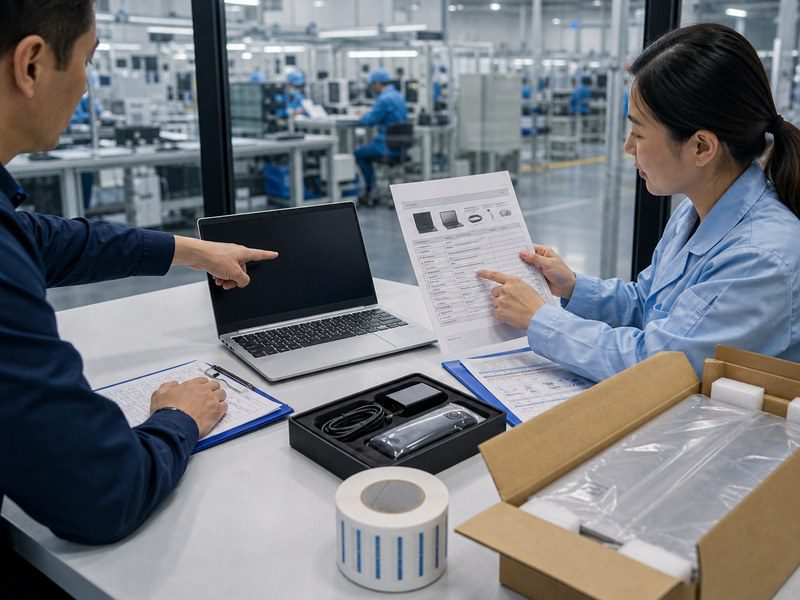
Ask the supplier to map the handoff from product selection through sample approval, mass production, inspection, packing, and shipment. For a factory-owned computer brand such as GetMi, available project support includes configuration selection, logo, software, packaging, inspection steps, and shipment support. Exact scope still needs to appear in the quote for the proposed model and order.
Can a Business Laptop Supplier Keep the Approved Configuration Consistent?
A business laptop supplier can reduce configuration drift only when the approved sample, component record, software image, accessories, and change-control rules become part of the order documents.
Lock the Approved Product Configuration
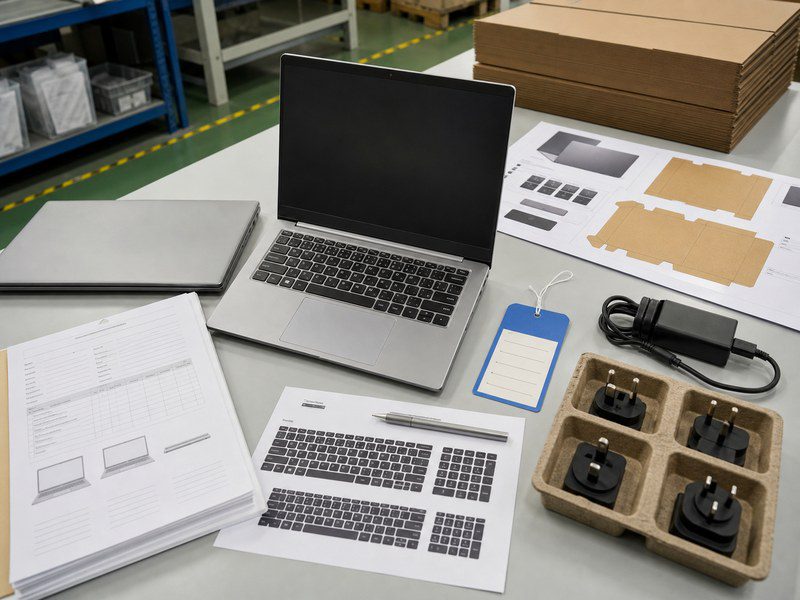
For custom laptops, create one configuration record for the sample and production batch. Record the model name, CPU platform, memory capacity and type, storage, display, wireless module, battery, charger, ports, keyboard, operating system, drivers, BIOS settings, logo, labels, and packaging.
The record should also name any allowed alternatives. “Equivalent component” is too broad for a buyer who needs the same performance, device image, certificate coverage, or support process across a fleet. Define the acceptable manufacturer, model, specification, and approval method for each alternate.
Require Approval for Component Changes
Require written approval before the supplier changes any locked component, software file, accessory, or packaging item. The change notice should identify the original part, proposed replacement, reason, affected quantity, test result, certificate impact, price impact, and delivery impact.
Do not approve a change from a description alone. Test the replacement in the same way as the original sample, then update the configuration record and approval date. This process matters most when a component reaches end of life or becomes unavailable between the first order and a repeat order.
How Should Buyers Verify a Business Laptop Supplier Before a Bulk Order?
Buyers should verify the supplier with the exact proposed sample, batch-specific quality records, and certificate files that match the quoted model and destination market.
Test the Exact Proposed Sample
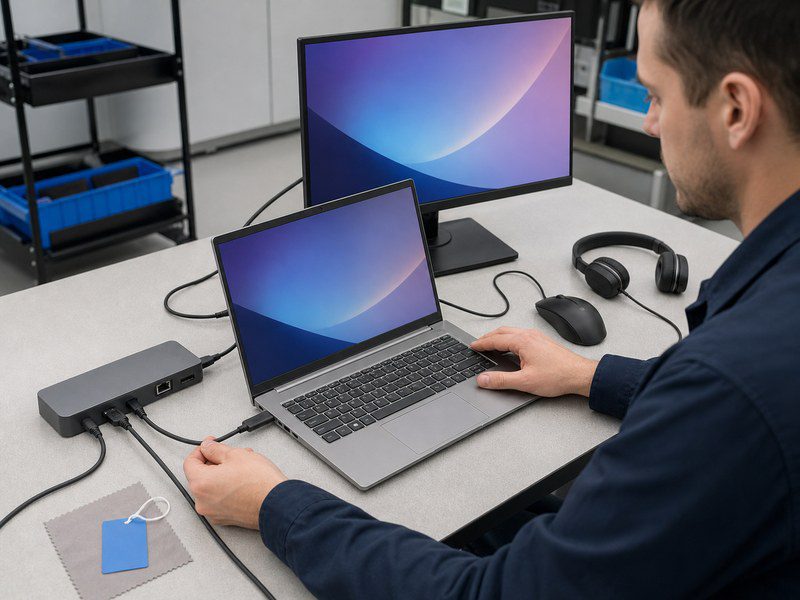
Test the same model and configuration shown on the quote. A nearby model, different CPU option, or generic showroom unit cannot prove how the ordered laptop will perform. If the proposal names the GetMi Lite 140C Laptop, use that exact public model name in the sample record and tie it to the approved configuration.
Check startup, charging, battery behavior, display, dead pixels, keyboard, trackpad, camera, microphone, speakers, WiFi, Bluetooth, ports, sleep and wake, thermals, operating system image, drivers, recovery process, charger plug, labels, and package contents. Use the buyer’s real docks, displays, network, software, and management process when compatibility affects deployment.
Photograph the sample and record its serial number, visible component information, software version, test method, exceptions, and approval date. Keep the approved unit available for comparison with production samples or inspection units.
Review Quality Control Records

Quality control records should show what the supplier checked, how many units were inspected, which defects appeared, how the supplier repaired them, and which units were retested. Ask the supplier to show where each inspection fits into wholesale laptop production. A general factory checklist does not prove that the proposed batch used the approved keyboard, charger, software image, or packaging.
Request incoming component checks, in-process inspection records, functional test logs, aging or load-test records when relevant, defect classifications, repair records, final inspection results, and packing photos. Match each record to the purchase order, model, batch, and inspection date.
Verify Certificate Scope by Model
Verify the certificate file, issuing body, applicant, manufacturer, product name, model list, standard, issue date, and validity where applicable. A company certificate and a model compliance document serve different purposes, so one should not be used as proof of the other.
Send the files to the buyer’s importer, retailer, tender team, or compliance adviser before production when document scope could affect market entry. If a quoted model is missing from the applicable certificate or report, ask for written clarification and supporting evidence before approval.
What Should Buyers Compare Beyond the Laptop Unit Price?
Buyers should compare the total delivered order, including configuration, services, defect handling, warranty responsibility, inspection, packing, logistics, and repeat-supply terms.
Identify Included Services and Exclusions
Ask each supplier to separate the laptop price from setup and order services. The quote should state whether the price includes the operating system image, license handling, drivers, keyboard language, logo, asset labels, serial-number report, retail packaging, manuals, accessories, inspection documents, export packing, freight, insurance, duties, and destination charges.
Use one written wholesale ordering process to carry the approved requirements from inquiry to quote, sample, production, packing, and shipment. Do not assume a service is included from a sales message or website statement. Put the agreed scope, file format, quantity, approval date, and charge in the quote or purchase order. This makes competing offers easier to compare and reduces late additions.
Compare Defect and Warranty Terms
Compare the defect and warranty process, not only the stated warranty period. The written terms should define covered defects, exclusions, evidence required, claim deadline, response route, repair or replacement method, spare-parts support, labor responsibility, and freight responsibility.
Ask how the supplier handles defects found before shipment and failures found after delivery. Confirm whether the buyer receives replacement units, parts, credit, repair support, or another remedy. Warranty length and remedies need supplier confirmation for the exact model and order.
Check Delivery and Supply Continuity
Confirm the production schedule, inspection window, shipping term, handoff point, required documents, and delay-notice process. Separate factory completion from departure, customs clearance, and final delivery so the schedule does not hide time outside the supplier’s control.
For repeat orders, ask about component end-of-life notices, approved alternates, minimum reorder quantity, packaging-file retention, software-image control, and spare-parts availability. Do not treat an estimate as a commitment until the supplier confirms the applicable quantity, configuration, materials, and shipping plan in writing.
FAQs
Can One Bulk Order Include Multiple Business Laptop Configurations?
Yes, one bulk order may include multiple business laptop configurations if the supplier accepts the split and records each configuration as a separate line item or SKU. Each version needs its own quantity, component record, sample approval, labels, packaging, certificate check, and price. MOQ and production effects need confirmation before the buyer approves the mix.
Can a Business Laptop Supplier Include Docks and Other Peripherals?
Yes, a business laptop supplier may include docks, mice, bags, adapters, portable monitors, or other peripherals when the supplier can source and test the complete bundle. Approve the exact accessory model, ports, power requirements, cable direction, firmware, package contents, and warranty route with the laptop sample. Supplier capability and bundle pricing need confirmation.
When Should Buyers Use Independent Third-Party Inspection?
Use independent third-party inspection when the buyer cannot inspect the batch, the order has material configuration or compliance risk, the supplier is new, or the purchase agreement makes inspection a release condition. Give the inspector the approved sample record, defect limits, test method, sampling plan, packaging rules, and reporting format before the visit.
Can a Business Laptop Supplier Apply Asset Tags and Provide Serial-Number Records?
A business laptop supplier may apply asset tags and provide serial-number records if the buyer defines the label data, position, format, scan requirements, and file layout before production. For custom brand laptops, put the asset-tag file and serial-number format on the same approval schedule as the logo and packaging. Test the tag material and barcode or QR code on the approved sample. This service is not verified for every GetMi model or order, so buyers should confirm scope and pricing with sales.
Can a Business Laptop Supplier Ship Devices Directly to Employees?
Some business laptop suppliers or logistics partners can ship devices directly to employees, but the service needs separate confirmation. Check destination coverage, individual packing, address-file security, device assignment, customs and tax handling, tracking, failed-delivery rules, returns, and local support before choosing direct shipment.