

How Wholesale Laptops Are Produced: A Complete Guide
Post Author:
GetMi Team
Date Posted:
April 12, 2026
Share This:
Wholesale laptops and tablet PCs are produced through structured manufacturing processes designed for scale, cost control, and customization. For B2B buyers, understanding how production works helps improve sourcing decisions and reduce risks.
From component sourcing to final assembly, the process includes hardware integration, software installation, testing, and packaging. Different manufacturing models will affect lead time, cost, and customization level.
What Are the Main Wholesale Laptop Manufacturing Models?
In the wholesale laptop market, three common manufacturing models are used: OEM, ODM, and brand manufacturing. These models differ in how products are designed, customized, and brought to market.
Choosing the right model can help you control costs, shorten lead time, and match your branding needs.
Differences Between OEM, ODM, and Brand Manufacturing
The three manufacturing models differ in terms of control, cost, and time to market.
- OEM manufacturing: Suitable for businesses with their own product design. The factory produces based on client specifications, offering high customization but requiring higher MOQ and longer lead time.
- ODM manufacturing: Ideal for fast market entry. Manufacturers provide ready designs that can be slightly customized, helping reduce cost and development time.
- Brand manufacturing: The company controls the full process from design to sales. This ensures strong brand identity but requires significant investment and is less suitable for external buyers.
Choosing Between Bulk Production and Custom Orders
The choice between bulk production and custom orders depends on cost, lead time, and the level of product differentiation required.
- Bulk production: Uses standardized models produced at scale. Lower cost, faster delivery, and suitable for resellers or price-sensitive markets.
- Custom orders: Allows changes in specs such as CPU, RAM, storage, OS, and design. Offers better differentiation but comes with higher cost, longer lead time, and higher MOQ.

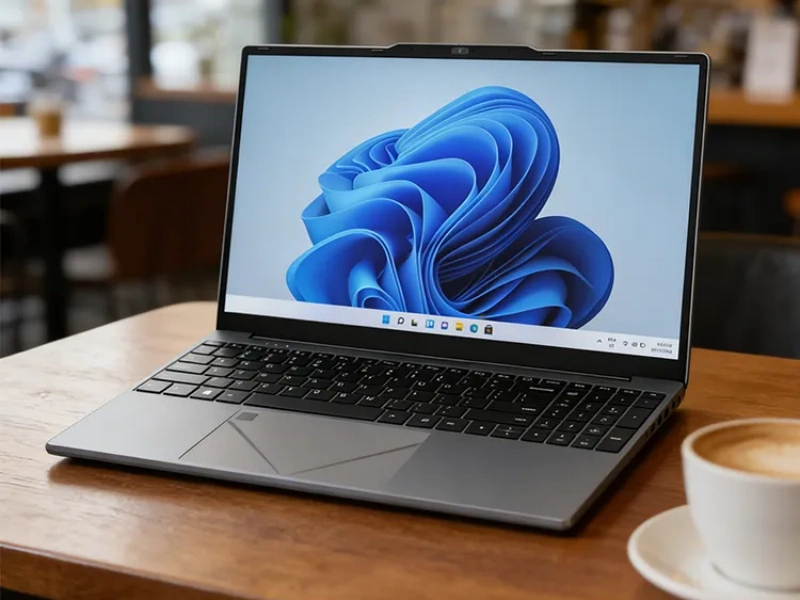
How Wholesale Laptops Are Manufactured Step by Step
Wholesale laptop manufacturing follows a clear process from product planning to final testing. Each stage is important for ensuring product quality, stable performance, and on time delivery.
Although the exact workflow may vary by project, most wholesale laptops are produced through several key steps, including design, sourcing, assembly, software installation, and quality control.
Product Planning and Design
The process starts with product planning and design. At this stage, manufacturers define the laptop’s target market, specifications, appearance, and key functions based on customer needs.
For OEM projects, the design is usually provided by the client. For ODM projects, manufacturers may offer existing designs that can be adjusted according to branding or configuration requirements.
Component Sourcing and Preparation
After the design is confirmed, the factory begins sourcing the required components. These usually include the processor, memory, storage, display panel, battery, keyboard, housing, and other internal parts.
Reliable sourcing is important because component quality directly affects product stability, lead time, and overall cost. Before production starts, all materials are checked and prepared for assembly.
PCB Production and Core Hardware Assembly
Once the components are ready, production moves to PCB manufacturing and core hardware assembly. The motherboard is one of the most important parts of a laptop, as it connects and supports all major components.
During this stage, factories complete circuit board production, chip mounting, and hardware integration. This step requires strict process control to ensure stable system performance.
Final Assembly and Software Installation
After the core hardware is assembled, the laptop enters final assembly. Workers install the screen, keyboard, battery, case, and other external parts to complete the device.
Once assembly is finished, the system software is installed. This may include the operating system, drivers, testing tools, and any customer requested programs or branding elements.
Quality Control and Testing
Before shipment, each laptop goes through quality control and testing. This step checks whether the device meets standards for performance, function, appearance, and reliability.
Common tests include boot testing, battery testing, screen inspection, interface checks, and aging tests. Strict quality control helps reduce defects and ensures the products are ready for market.
What Are Wholesale Laptops Used For?
Wholesale laptops are widely used across different industries where bulk purchasing, cost efficiency, and stable supply are important. Businesses choose wholesale models to support large scale deployment and consistent performance.
The applications vary depending on the target market, but most use cases fall into several key categories.
Corporate and Enterprise Procurement
Many companies purchase laptops in bulk for internal use. These devices are used by employees for daily operations such as office work, communication, and data management.
Wholesale laptops help enterprises standardize equipment, reduce procurement costs, and simplify maintenance across teams.
Education and Training Projects
Schools, universities, and training institutions often require large quantities of laptops for students and staff. These projects usually focus on affordability, durability, and ease of use.
Wholesale supply ensures consistent specifications across devices, making it easier to manage teaching environments and IT support.
Resellers and Distribution Businesses
Distributors and resellers buy laptops in bulk to sell in local markets or through online channels. They may choose ODM or customized products to match their brand positioning.
Wholesale manufacturing allows them to maintain competitive pricing, stable inventory, and flexible product offerings.
How to Choose a Reliable Wholesale Laptop Manufacturer
Choosing the right manufacturer is critical for ensuring product quality, stable supply, and long term cooperation. A reliable partner can help reduce risks, control costs, and support your business growth.
Beyond pricing, businesses should evaluate a supplier’s production capability, compliance standards, and real project experience to make a well-informed decision.
Checking the Manufacturer’s Production Capacity
Production capacity determines whether the supplier can handle your order volume and deliver on time. This includes factory size, number of production lines, workforce, and monthly output.
A reliable manufacturer should be able to support both large scale orders and ongoing repeat production. Stable capacity also means better control over lead time, especially during peak seasons.
Reviewing Certification Documents
Certifications are key indicators of product quality and market compliance. Common certifications include CE, FCC, RoHS, and ISO standards.
These documents ensure the products meet international safety and environmental requirements. For B2B buyers, working with certified manufacturers reduces the risk of customs issues and market restrictions.
Evaluating Past Customer Cooperation Experience
Past project experience reflects the manufacturer’s reliability and service capability. This includes the types of clients they have worked with, project scale, and whether they have handled OEM or ODM requirements.
Manufacturers with strong cooperation experience are usually more familiar with customization needs, communication processes, and problem solving during production.

Trusted Wholesale Laptop Manufacturer and Supplier: GetMi
GetMi is a professional OEM and ODM manufacturer based in Shenzhen, with nearly 20 years of experience in laptop and tablet PC production. The company focuses on providing cost-effective, customizable devices for global brands, distributors, and enterprises.
With over 10,000 completed projects and exports to more than 180 countries, GetMi has built long-term partnerships with clients worldwide. Its factory integrates design, production, and quality control to ensure stable supply and consistent product performance.
Wholesale Laptop Product Range
GetMi offers a wide range of wholesale products, including laptops, tablet PCs, all-in-one PCs, mini PCs, and portable monitors. These products are designed for business, education, and commercial use.
Different screen sizes, configurations, and performance options are available, allowing customers to select products that match their target markets and pricing strategies.
Flexible OEM and ODM Customization Services
GetMi provides full OEM and ODM services to support different business models. Customers can customize hardware specifications, product appearance, branding, packaging, and pre-installed software.
The company follows a structured customization process from concept design to mass production, helping clients launch products efficiently while maintaining quality and consistency.
Stable Supply Chain and Fast Delivery
GetMi operates a modern manufacturing facility with automated production lines and strict quality control systems. Each product goes through multiple inspection stages to ensure reliability.
With a stable supply chain and optimized production workflow, GetMi is able to support bulk orders and ensure on-time delivery, helping clients maintain inventory stability and respond quickly to market demand.
FAQ
What is the minimum order quantity (MOQ) for wholesale laptops?
The MOQ for wholesale laptops depends on the product type and customization level. Standard models usually have lower MOQ, while OEM and ODM orders require higher quantities due to production and sourcing requirements.
Can wholesale laptops be customized for business needs?
Yes, wholesale laptops can be customized. Common options include hardware specifications, logo branding, packaging, and pre-installed software.
How long does it take to manufacture laptops in bulk?
Bulk laptop production typically takes 2 to 6 weeks. The exact timeline depends on order size, customization level, and component availability.
What factors affect the cost of wholesale laptops?
The cost of wholesale laptops is affected by hardware configuration, order quantity, customization requirements, component prices, and shipping costs.
Conclusion
Wholesale laptop production covers the full process from design and component sourcing to assembly and quality control, with OEM and ODM models offering flexible options for different business needs.
A reliable manufacturing partner helps ensure consistent quality, controlled costs, and stable delivery, which are essential for efficient procurement and long term growth. GetMi, as an experienced OEM and ODM manufacturer, provides dependable solutions for global clients seeking scalable and customizable laptop products.