

OEM Tablet Manufacturers: How to Choose a Supplier for Bulk Orders
Post Author:
GetMi Team
Date Posted:
July 14, 2026
Share This:
Choose an OEM tablet manufacturer that can prove factory control, repeat the approved build, and document any change. Lock the specification, golden sample, compliance files, firmware, QC plan, and substitution rules before mass production.
A low quote does not protect a buyer from spec drift, certificate mismatch, mixed OS images, or unapproved parts. Compare written evidence, not sales claims.
What Makes an OEM Tablet Manufacturer Suitable for a Bulk Order?
Choose a supplier that matches the use case, repeats the approved build, and controls software, compliance, branding, and reorders.
| Buying decision | Evidence to request | Risk if skipped |
|---|---|---|
| Product fit | Use case brief and specification | Returns or excess cost |
| Build control | BOM revision and approved alternates | Batch inconsistency |
| Software control | OS image record and update terms | Mixed settings |
| Compliance | Files tied to the quoted model | Import or launch delays |
| Repeat orders | Change notice and approval process | SKU drift |
Fit With the Target Use Case and Market
Define the user, task, sales channel, and destination country. Record the operating environment, network, accessories, repair path, target price, and reorder plan.
- Education orders need charging, app control, cases, keyboards, and repair rules.
- Kiosk orders need mounting, continuous power, remote management, and network recovery.
- Field units need handling, temperature, camera, charging, and offline workflow checks.
- Distribution orders need local packaging, language, plug, and repeatable SKU rules.
GetMi groups its wholesale tablet PCs by product family. The quote still needs exact hardware, software, accessories, and certificate scope.
Hardware, OS, Ports, and Accessory Support
Approve a full specification, not a model name alone. Record the processor, memory, storage, display, cameras, battery test method, wireless functions, ports, charger, and accessories. Add the OS version, build ID, patch level, license responsibility, recovery method, and allowed component alternatives.

Use one model name across the quote and approval files. For example, repeat GetMi Lite 108C Tablet PC on the specification, sample label, software record, inspection sheet, and purchase order. Confirm exact specifications before approval.
Branding, Packaging, and Software Support
Approve the device logo, color, finish, and serial rules. Use a separate software record for the boot image, wallpaper, apps, language, and startup settings. Packaging approval should cover artwork, manuals, barcodes, carton marks, and accessory placement.
Name the owners for image builds, app installation, signing keys, reset tests, updates, and faults found after shipment. Add costs and sample rules to the approval pack.
Order Volume and Repeat-Order Fit
Ask for the MOQ by hardware configuration, color, logo method, packaging type, accessory bundle, and software image. Separate minimums can force unwanted stock even when the total order meets the quoted MOQ.
For repeat orders, require the same BOM revision, OS image, factory, and test records. Also record component availability, change notice timing, approved alternates, and last-time buy options.
Destination-Market Compliance Requirements
Start with the destination country, importer role, wireless configuration, charger, battery, labels, manual language, and sales channel. Ask a qualified lab or local compliance adviser to confirm the applicable rules.
For US shipments, confirm applicable FCC equipment authorization, labeling, and RF exposure requirements. For EEA shipments, confirm applicable declarations, technical files, CE marking, importer details, and manual languages.
Match the model name, hardware revision, wireless module, label artwork, and issue date across the approved build and compliance files. An unrelated report does not prove coverage for the quoted tablet.
How Should Buyers Verify an OEM Tablet Manufacturer?
Verify the legal entity, factory role, production controls, engineering staff, and change records. Documents should connect the quoted tablet to the contract company and production site.
Factory Identity and Production Ownership
Match the public GetMi OEM/ODM computer factory identity with the business license, factory address, contract name, invoice name, bank beneficiary, and export documents. Request a written explanation for any mismatch.
Map which steps occur inside the factory and which go to board makers, molding vendors, test labs, or packaging plants. Assign written responsibility for subcontractor quality and component changes.
Production Lines and Testing Equipment
Trace one unit through receiving, assembly, software loading, function testing, any required aging test, repair, retest, and packing. Check work instructions, test limits, calibration labels, defect records, and saved results. Equipment counts alone do not prove repeatable production.
Tablet Engineering and Customization Capabilities
Test the engineering workflow with one real request, such as a boot logo, language pack, app, port, or accessory. The supplier should state technical limits, responsible engineers, cost, schedule, sample revision, test method, and rollback plan.
A project to build a tablet computer needs this controlled requirement record before either team approves the result.
Communication and Change-Control Process
Route each technical change through a shared log. Record the affected part or file, reason, cost, schedule and certificate effects, sample need, approver, and effective production lot.
Block production while required approvals remain open. Attach the final BOM, firmware, artwork, packaging, and change log revisions to the purchase order.
Factory Audit Records and Buyer References
Use audit records that name the site, date, production scope, findings, corrective actions, and closure evidence. A certificate image without its scope says little about the quoted model or line controls.
Ask references about sample accuracy, defect handling, change notices, and repeat-order stability. Choose projects with a similar product, quantity, customization level, and destination market.
How Should Buyers Compare Supplier Proposals and Bulk Order Terms?
Compare proposals against one specification, quantity, software scope, packaging request, delivery term, and acceptance plan.
Unit Price, Tooling, and Customization Costs
Separate the unit price from setup, per-batch, and optional charges. Request separate lines for:
- Hardware, accessories, inspection, and spare units.
- Logo work, packaging, labels, and tooling.
- Software images, apps, licenses, testing, and updates.
- Compliance work and freight preparation.
State who owns, stores, repairs, and can reuse paid tooling or design assets.
MOQ by Configuration, Color, and Branding
Use an MOQ matrix. List each hardware option, color, logo method, packaging version, language, accessory bundle, and OS image. Confirm whether variants can combine and whether trial orders carry different limits.
Request MOQ terms for the selected GetMi model in writing before artwork or sample work begins.
Sample Fees and Trial Order Terms
Write the sample type, configuration, branding, fee, freight, schedule, refund rule, revision allowance, and ownership into the terms. A standard sample does not prove custom software, packaging, or market configuration unless it includes that work.
Confirm GetMi sample cost, refund rules, and custom sample timing for the exact project.
Production Schedule and Shipping Handover
Schedule requirement freeze, artwork approval, component readiness, sample approval, production, inspection, packing, payment, and carrier handover.
Name the trade term, handover place, freight responsibility, document list, and release evidence in the purchase order. The wholesale computer order process uses the same approval milestones. Set dates after the supplier confirms component and line availability.
Payment, Warranty, and Defect Claim Terms
Keep an inspection and correction point before shipment. The contract should define the warranty period, covered parts, exclusions, claim evidence, response time, remedy, reporting deadline, and freight responsibility.
Request order-specific GetMi payment and warranty terms. Define who decides whether a failure came from production, freight, software, misuse, or an unapproved accessory.
How Should Buyers Approve a Tablet Before Mass Production?
Release mass production after the buyer signs one revision-controlled approval pack. Use the same records at the factory and final inspection.
Detailed Specification Sheet and Approved Components
Identify fields that affect fit, performance, compliance, or support. A complete tablet PC configuration record should include:
- Factory model, buyer SKU, and hardware revision.
- Processor, memory, storage, display, touch, cameras, battery, wireless modules, ports, buttons, and sensors.
- Housing, logo, charger, cable, case, keyboard, stylus, and other accessories.
- Controlled part numbers, approved alternates, and required retests.
Block unapproved substitutions.
OS Image, Firmware, Apps, and Language Settings
Approve the exact software build that customers will receive. Record the OS and firmware versions, build ID, security patch level, languages, time zone, keyboard, apps, and permissions. Add the update method, recovery behavior, and factory reset result.
Also name the owners of signing keys, the archived image, OTA updates, licenses, and support after shipment. Save a checksum or signed image record when available.
Golden Sample and Acceptance Tests
Mark the physical golden sample with a serial number, tamper label, approval date, and signed acceptance sheet. Attach its specification, software record, photos, accessories, and packaging record.
Define test methods and pass limits for appearance, touch, display, cameras, audio, ports, charging, wireless functions, sensors, sleep, apps, recovery, and factory reset. Photo approval does not test device behavior.
In-Process and Final Inspection Plan
Define incoming checks, first unit approval, production tests, final sampling, defect classes, rework, retest, and shipment release. Name who records results and who can stop production.
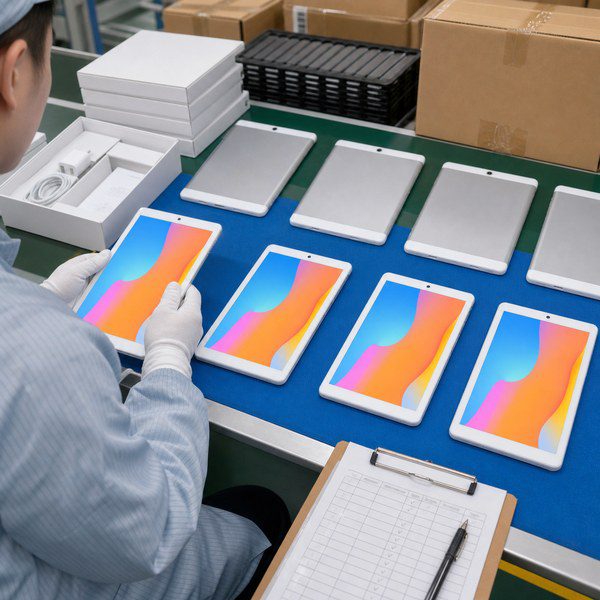
getmi oem tablet batch qc 600
Final inspection should compare the batch with the golden sample. Verify the hardware, software version, language, logo, labels, accessories, charger, packaging, quantity, and document pack before release.
Certificate Files, Packaging, and Label Approval
Compare the device, box, manuals, reports, declarations, and commercial documents as one shipment package. Keep model names, hardware revisions, wireless modules, importer details, warnings, labels, barcodes, and serial rules consistent.
Approve packaging artwork, inserts, accessory positions, protective materials, carton quantity, and carton marks using the final device and accessories.
FAQs
How Long Will an OEM Tablet Manufacturer Provide Firmware and Security Updates?
Firmware support periods for OEM tablets vary by chipset, OS build, and contract. Buyers should require a written patch schedule, update method, support end date, covered faults, and cost. Before mass production, install one signed update on the golden sample and verify that the tablet can recover from a failed update.
Can OEM Tablets Be Pre-Enrolled in MDM or Kiosk Mode Before Shipment?
A factory can enroll OEM tablets before shipment when the hardware, OS build, EMM platform, and setup method are compatible. Buyers should approve a pilot before batch enrollment and test zero-touch or QR setup, factory reset, remote wipe, offline recovery, kiosk exit, and ownership transfer. Device and EMM support varies.
Who Owns Custom Firmware, Tooling, and Design Files?
Ownership of custom firmware, tooling, and design files depends on the signed contract, not payment alone. The contract should assign ownership and reuse rights for source code, binaries, signing keys, firmware images, molds, fixtures, drawings, dielines, artwork, and test scripts. Buyers should request exportable copies at agreed milestones.
What Happens When a Tablet Component Reaches End of Life?
When a tablet component reaches end of life, the supplier should issue a written notice before substitution. The notice should identify the affected part, remaining stock, last order date, proposed alternate, and effects on cost, schedule, software, testing, and compliance. Production should wait for the buyer’s updated BOM and sample approval.
How Should Buyers Audit Preinstalled Apps, Admin Access, and Device Security?
Buyers should audit the exact production image and repeat the audit after factory reset. Check app sources, package versions, permissions, administrator roles, device owner status, signing information, update servers, debug settings, root access, default credentials, data collection, remote wipe, recovery access, bootloader state, and unexpected network traffic. Record accepted exceptions in the golden sample approval.